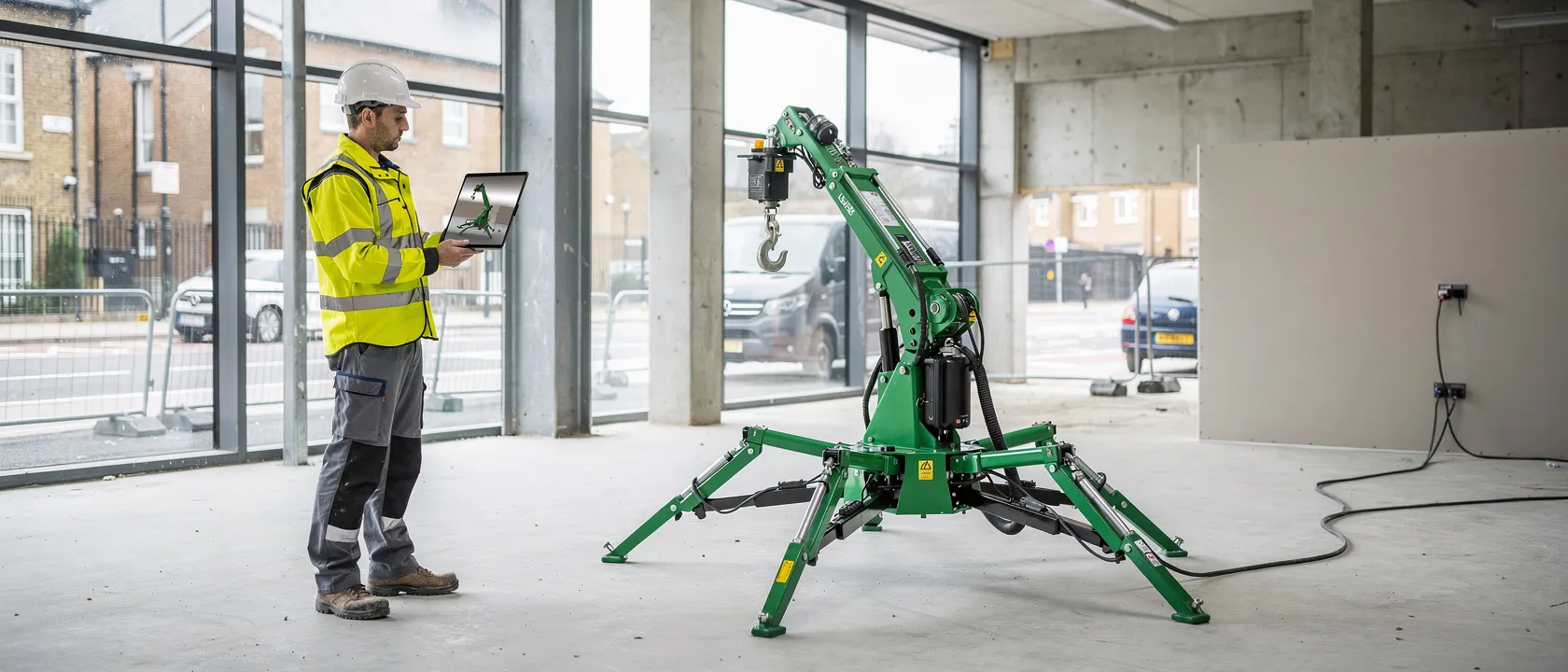
Cranes have changed more in the last ten years than in the thirty before. Some of the changes are visible, such as electric cranes working inside buildings. Others are hidden in software that plans, monitors and protects every lift. Here is what is changing, and what it means if you hire a crane.
Lower-emission cranes
Electric and hybrid cranes
Many spider and mini cranes now run on battery or mains power, which lets them work indoors and in low-emission zones. Larger mobile cranes increasingly offer electric slewing and hoisting from site power, with the diesel engine used only for travel. Electric tower cranes have been standard for years.
Cleaner fuels
Many UK operators now run cranes on HVO (hydrotreated vegetable oil), a renewable diesel replacement that cuts lifecycle carbon emissions without engine changes. For clients with carbon targets, it is worth asking.
Smarter planning
3D lift planning
Lift planners now model the crane, the load and the site in 3D software, testing radius, clearances and outrigger loads before the crane arrives. Combined with drone surveys and site photos, this catches problems such as a tree, a cable or a slope early.
Ground bearing calculations
Software now calculates outrigger and track pressures for each crane configuration, making it easier to design mats and working platforms correctly.
Safer operation
- Anti-collision and zoning systems stop tower cranes clashing with each other or swinging over roads and railways
- Camera systems on hooks and booms let operators see blind lifts
- Rated capacity limiters are more precise and record every lift
- Remote control lets spider and self-erecting crane operators stand where they can see best
Telematics and data
Modern cranes report their position, hours, faults and lift data. For hire companies this means better maintenance and fewer breakdowns. For clients it can mean evidence of how a lift was carried out.
Modular and off-site construction
More buildings are now assembled from factory-made modules and panels. That shifts crane work from many small lifts to fewer, heavier and more precise ones, and puts more weight on the lift plan.
What it means for you
- Ask about electric options if you are working indoors or in a clean air zone
- Ask for lift plans with drawings on complex jobs
- Expect faster, more accurate quotes when you send photos and drawings
- Technology supports good planning but never replaces a competent crew
Want a crane for an upcoming project? Send us the details and we will recommend the right machine.