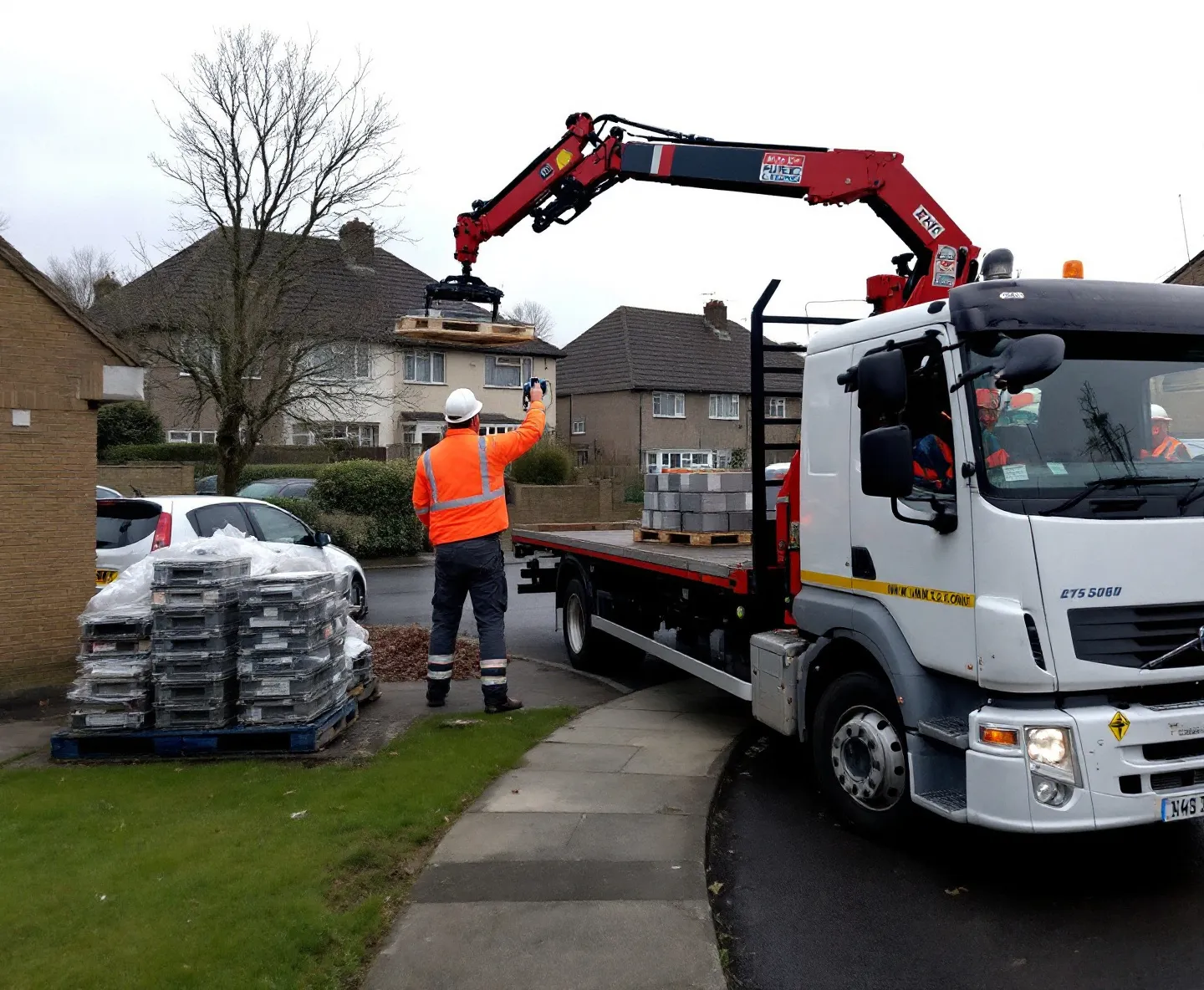
A HIAB is a lorry-mounted crane, also called a lorry loader. HIAB is a brand name that the industry uses for all of them. The crane sits behind the cab or at the rear of the bed, so one vehicle can collect a load, drive it to site and lift it straight into position. For many jobs that saves hiring a separate crane and a lorry.
Typical jobs
Building materials
Steel, blocks, timber, roof trusses and precast lifted from the bed to scaffold, roof or plot.
Machinery moves
Generators, compressors, plant and factory machines collected, transported and set down.
Cabins and containers
Site welfare units, shipping containers and garden buildings delivered and placed.
Domestic lifts
Hot tubs, swim spas, sheds and garden rooms lifted over the house from the road.
When to choose a lorry crane
A lorry loader is the most economical option when the load needs moving and lifting: collecting a machine from one site and setting it down at another, or delivering steel and lifting it onto the frame. One vehicle and one operator do the whole job.
It is less suited to very heavy loads, very long reaches or lifts from deep inside a site. For those, a mobile crane or a spider crane is usually the better tool, and we will tell you so when we quote.
How a HIAB job runs
- Collection. If we are moving your load, the lorry collects it and the operator secures it to the bed.
- Positioning. On site the lorry parks as close to the set-down point as safely possible. The stabiliser legs go out onto pads.
- Lifting. The operator works the crane from the vehicle controls or a radio remote, guiding the load into place.
- Away. Stabilisers in, and the lorry leaves. Most local jobs take two to four hours.
Grab, pallet forks and other attachments
Many lorry loaders carry attachments that extend what they can do: pallet forks for palletised materials, brick grabs and clamshell grabs for loose materials, man-baskets for working at height where allowed, and winches for loading plant. Tell us the load and we will match the right attachment.
Parking and permits
The lorry has to park close to the lift, often on the road. If its stabilisers will sit on the public highway or pavement for any length of time, you may need a permit from the local council. We flag this at quote stage and can include it in a contract lift.
Lorry loader sizes
Typical figures for each class. Exact capacity depends on the model and the radius of the lift, so we size every crane from your load and the reach needed.
| Vehicle | Crane size | Max reach | Bed payload | Typical jobs |
|---|---|---|---|---|
| 7.5 t – 18 t rigid | 8 – 20 tm | 10 – 15 m | 2 – 8 t | Domestic lifts, cabins, pallets in tight streets |
| 26 t rigid (3 axle) | 20 – 45 tm | 15 – 20 m | 10 – 14 t | Steel, trusses, plant, containers |
| 32 t rigid (4 axle) | 40 – 85 tm | 18 – 25 m | 14 – 18 t | Heavier steel, precast, machinery |
| Artic (44 t) | 50 – 100+ tm | 20 – 25 m | 20 – 25 t | Long loads, portable buildings, bulk materials |