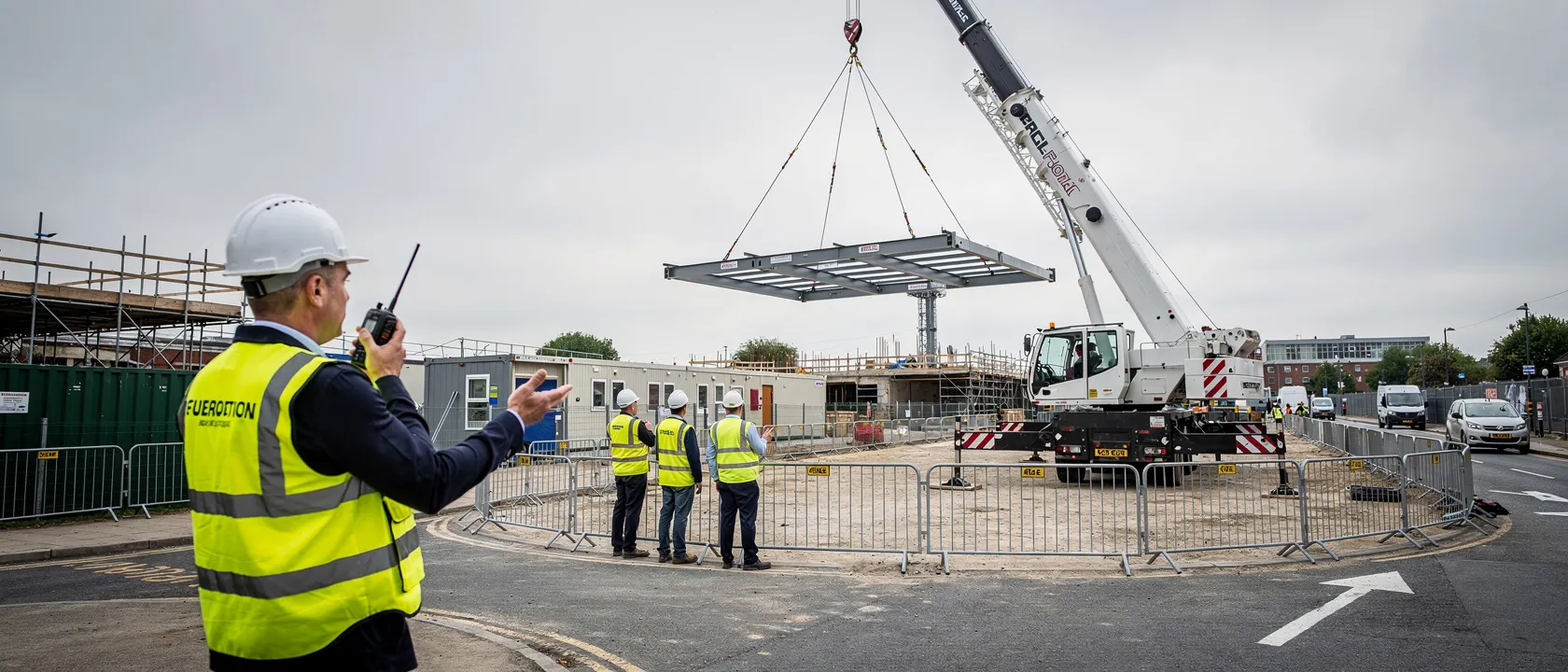
Crane lifting in the UK is governed by a small set of laws and one key code of practice. Knowing them, and knowing who carries each duty, is the difference between a smooth lift and a serious incident.
The main laws
Health and Safety at Work etc. Act 1974
The foundation of UK workplace safety. Employers must ensure, so far as reasonably practicable, the health and safety of their workers and anyone affected by their work, including the public near a lift.
LOLER 1998
The Lifting Operations and Lifting Equipment Regulations are the core law for cranes. They require that:
- lifting equipment is strong and stable enough for its use and marked with its safe working load
- every lifting operation is properly planned by a competent person, appropriately supervised and carried out safely
- equipment is thoroughly examined before first use, after installation, at regular intervals (at least every 12 months for cranes, every 6 months for lifting accessories and equipment for lifting people), and after anything that could affect its safety
- examination reports are kept and defects acted on
PUWER 1998
The Provision and Use of Work Equipment Regulations require equipment to be suitable, maintained and used only by trained people.
CDM 2015
The Construction (Design and Management) Regulations set duties for clients, designers and contractors on construction projects, including planning the lifting work that the project needs.
RIDDOR 2013
Certain crane incidents, such as the collapse or overturning of lifting equipment, must be reported to the HSE even if nobody is hurt.
BS 7121: the code of practice
BS 7121, the Code of Practice for Safe Use of Cranes, explains how to meet LOLER in practice. Its parts cover general requirements, inspection and thorough examination, and specific crane types: mobile cranes, lorry loaders and tower cranes. Key points include:
- every lift is under the control of an Appointed Person
- a written lift plan proportionate to the risk
- a competent crane supervisor, operator and slinger-signaller
- clear communication and exclusion zones
Who is responsible on a crane hire?
This depends on the hire terms, usually the Construction Plant-hire Association (CPA) model conditions.
| Duty | CPA hire (operated) | Contract lift |
|---|---|---|
| Crane maintained and examined | Hire company | Crane company |
| Competent operator | Hire company | Crane company |
| Lift planning and Appointed Person | Hirer (you) | Crane company |
| Slinger-signaller and supervision | Hirer (you) | Crane company |
| Insurance for the load | Hirer (you) | Crane company |
On a CPA hire, the operator works under your direction and you carry the planning duties. On a contract lift, those duties move to the crane company. If you do not employ an Appointed Person, choose a contract lift.
Qualifications to look for
- Operators: CPCS or NPORS card for the crane type (for example CPCS A60 for mobile cranes, A04 for tower cranes), or ALLMI for lorry loaders
- Slinger-signallers: CPCS A40 or equivalent
- Appointed Persons: CPCS A61 or equivalent, with crane supervisors on A62
A quick compliance checklist
- Thorough examination certificate in date for the crane and accessories
- Operator’s card valid for this crane
- Lift plan written and briefed to the crew
- Ground and outrigger loads assessed
- Permits in place for any work on the highway
- Exclusion zone set up and the public kept clear
For the standards behind the equipment itself, read how UK and international standards shape crane safety equipment.