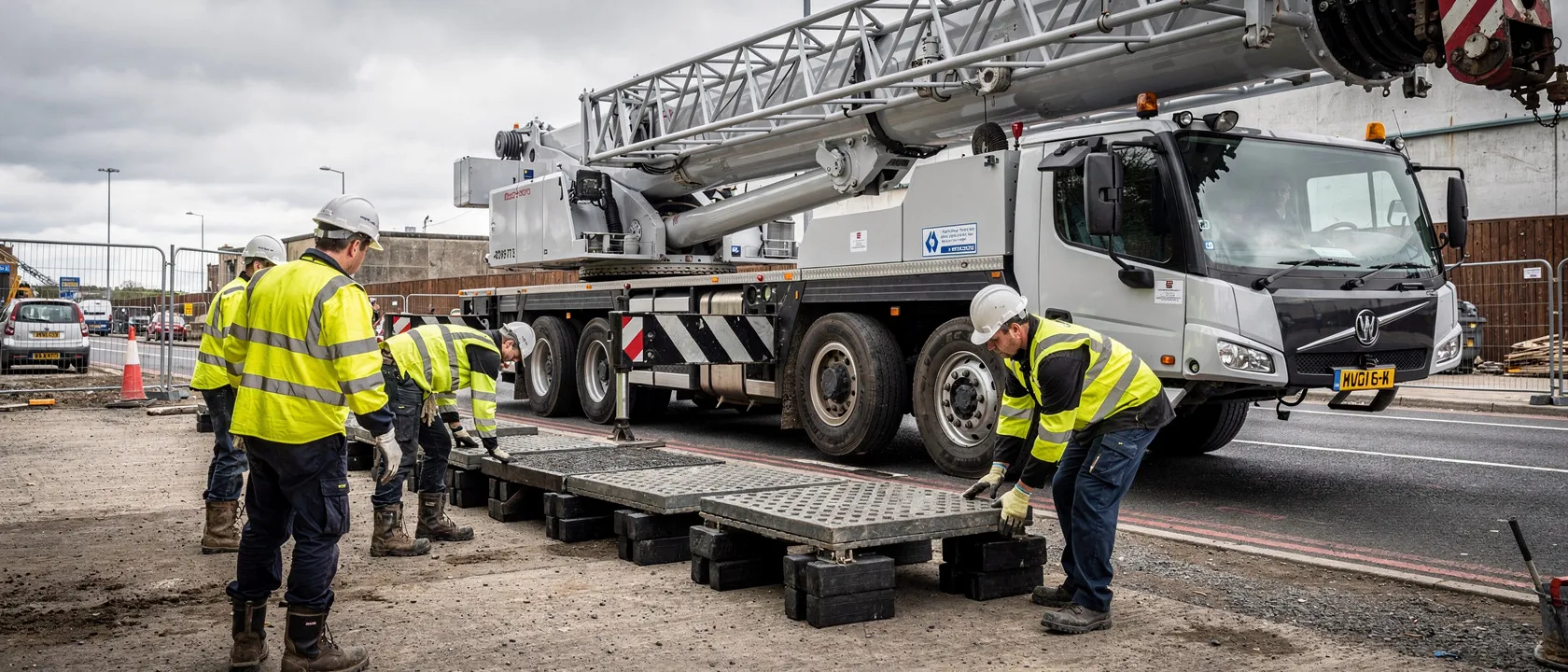
Safety equipment on a crane lift works in layers: devices built into the crane, gear that spreads loads and controls the area, and personal protective equipment for the crew. No single layer is enough on its own. Together, with a good lift plan, they prevent the incidents that cranes are capable of causing.
Devices built into the crane
Rated capacity indicator and limiter
The most important safety device on a modern crane. It measures the load and the crane’s configuration in real time, warns the operator as the lift approaches capacity, and stops movements that would increase the load moment beyond the limit. Required on mobile cranes under BS EN 13000.
Overhoist (anti-two-block) protection
Stops the hook block being winched up into the boom tip, which could snap the hoist rope and drop the load.
Wind speed indicator
An anemometer at the top of the crane shows the wind speed, so the crew can stop lifting before the manufacturer’s limit.
Slew, height and zoning limits
Software and switches that stop the crane swinging into a road, railway, overhead line or neighbouring crane.
Outrigger monitoring
Sensors that confirm the outriggers are extended to the position the load chart assumes. Many cranes reduce capacity automatically if they are not.
Equipment around the crane
- Outrigger mats and spreader pads spread the huge point loads under each outrigger over a larger area of ground
- Tag lines let the crew control a swinging load from a safe distance
- Barriers and signage mark the exclusion zone under and around the lift
- Radios keep the operator and slinger-signaller in constant contact when they cannot see each other
Lifting accessories
Slings, shackles, beams and hooks are safety equipment too. They must be rated for the load, marked, examined at least every six months under LOLER, and checked before every use. See maintaining crane safety equipment.
Personal protective equipment
PPE is the last line of defence, not the first, but it is essential on every lift:
- Hard hat: protection from falling objects and head strikes, with a chinstrap when working at height
- High-visibility clothing: so plant operators and drivers see the crew
- Safety boots: toe protection and grip
- Gloves: for handling wire ropes, chains and loads
- Eye and hearing protection: where the task or environment needs it
- Harness and lanyard: when working at height, for example climbing a tower crane or working from a man-basket
Why it matters
Crane incidents are rare, but when they happen the consequences are severe: dropped loads, overturned cranes and contact with overhead power lines. Safety equipment also brings practical benefits:
- Compliance with LOLER, PUWER and site rules
- Less downtime, because faults are found before they become failures
- Lower insurance risk and a better reputation with clients
Equipment is not a substitute for planning
The best limiter cannot account for a cellar under an outrigger or a gust catching a cladding panel. That is the Appointed Person’s job. If you do not have one, a contract lift brings the planning, the equipment and the crew together.