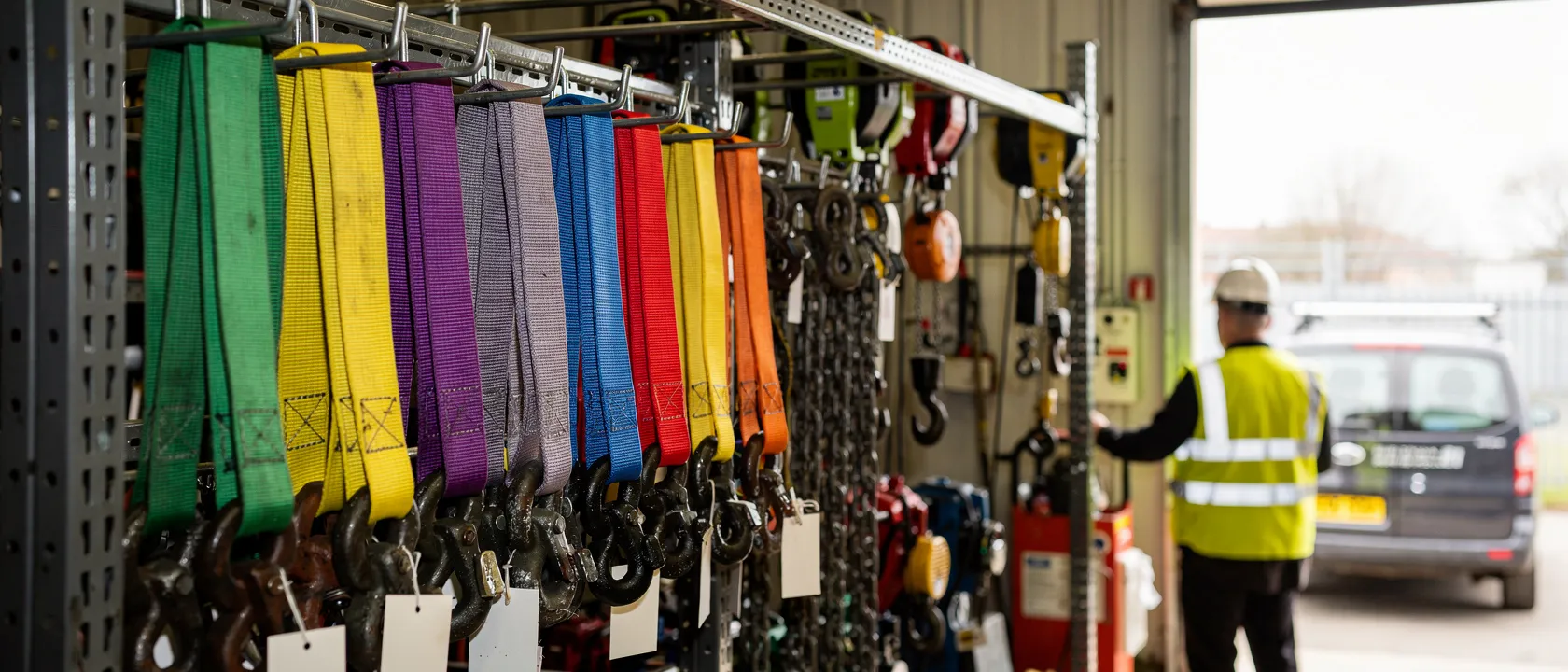
Most lifting failures trace back to the gear between the hook and the load: a cut sling, a bent shackle, a damaged hook latch. Looking after that gear properly is simple, cheap and required by law.
Three levels of checking
1. Pre-use checks
Before every lift, the person using the gear checks it visually. For example:
- Textile slings: cuts, abrasion, burns, chemical damage, damaged stitching, and a missing or unreadable label
- Wire rope slings: broken wires, kinks, crushing, corrosion and damaged ferrules
- Chain slings: stretched, bent or nicked links, and a worn or damaged hook latch
- Shackles: a bent body, a damaged or wrong pin, and a missing marking
If in doubt, take it out of use.
2. Regular in-service inspection
Many sites add weekly or monthly inspections by a competent person, especially where gear is used heavily or in harsh conditions.
3. Thorough examination under LOLER
A formal, documented examination by a competent person, usually an independent examiner:
- every 6 months for lifting accessories and equipment used to lift people
- every 12 months for other lifting equipment, such as the crane itself
- or to a written examination scheme drawn up by a competent person
- and after any event that could affect safety, such as an overload or damage
The examiner issues a report, which must be kept and made available. Defects that are dangerous must be acted on immediately.
Cleaning
- Wash off mud, concrete and grit, which wear fibres and hide damage
- Clean textile slings in clean water only, and let them dry naturally away from direct heat
- Wipe chains and wire ropes, and lubricate wire ropes as the manufacturer recommends
- Never use harsh chemicals unless the manufacturer approves them
Storage
- Store gear off the ground, on racks or hooks, in a dry, ventilated place
- Keep textile slings out of sunlight, as UV degrades polyester and nylon
- Keep it away from chemicals, heat and sharp edges
- Store gear so it is easy to inspect and labels stay readable
Identification and records
Every accessory should carry a unique ID and its safe working load. Keep a register linking each ID to its certificate, examination reports and any defects. Many firms use colour coding to show the current examination period at a glance; it is not a legal requirement, but it makes checks quicker.
Repair and retirement
- Only competent people should repair lifting gear, and many items, such as textile slings, should never be repaired
- Quarantine damaged gear immediately so it cannot be used by mistake
- Follow the manufacturer’s discard criteria, and destroy retired gear so it cannot come back into use
When you hire a crane
On an operated hire or contract lift, the crane company supplies examined lifting gear with the crane. If you supply your own accessories, they must meet the same standard. On a contract lift, all lifting gear is the crane company’s responsibility.